
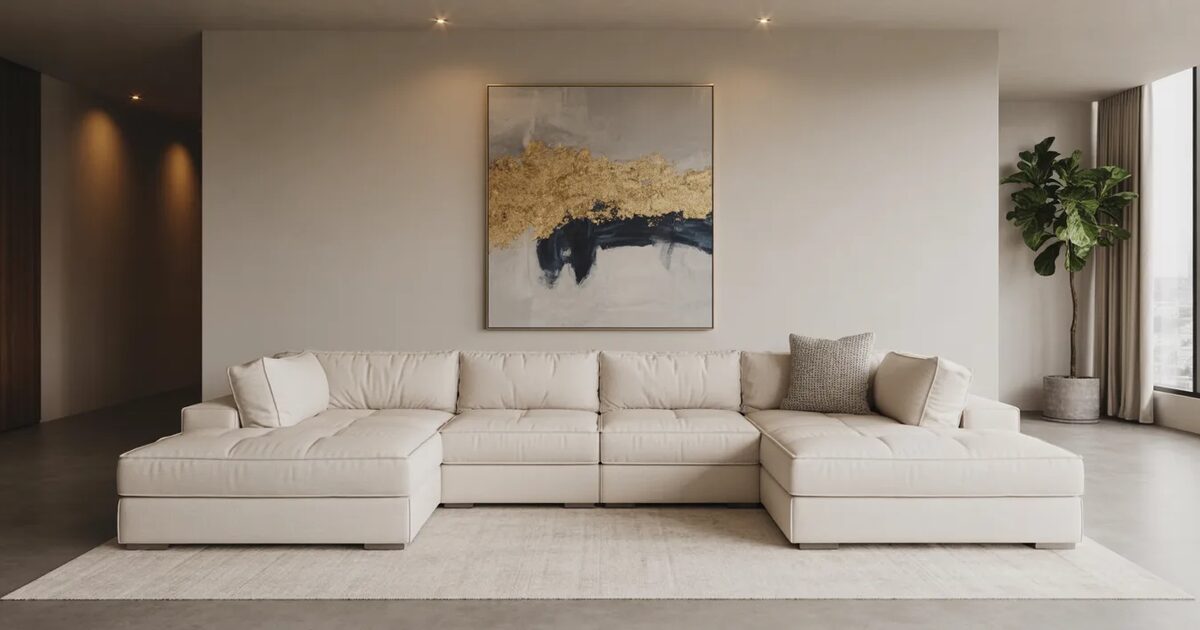
The freestanding wardrobe stops a hand's width short of the ceiling. The gap collects dust, the sides never quite meet the wall, and the door catches the radiator pipe every time you open it. Most of us have lived with a piece of furniture that almost fits. Bespoke fitted furniture exists to end that, and used well it changes how a room works every single day.
Part of the interior design Chelmsford guides by Rachel Buscall Interiors. See all interior design guides.
It is also easy to overspend on. Fitted joinery is a serious commitment, and not every wall deserves it. The skill lies in knowing which is which before you ask for a quote.
When bespoke fitted furniture is worth the commitment
The strongest case is a space that standard furniture cannot fill properly. An alcove beside a chimney breast, a landing with a sloping ceiling, a bay window, a wall with a door pushed awkwardly into the corner. Off-the-shelf pieces leave gaps in all of these, and gaps turn into dead space, dust and clutter.
Fitted furniture is made to the measurements of the room, so it can run from floor to ceiling, wrap around a window or tuck neatly around a boiler cupboard. Done properly, it reads as part of the architecture, which makes a small room feel calmer. A wall of cupboards painted the same colour as the walls simply disappears, and the eye is free to rest on something more interesting.
The second good case is a room with a heavy storage job. A boot room serving a whole household. A home office that has to hide its own paperwork. A media wall that must conceal cables and equipment. When the task is specific, a piece designed around that task beats a generic one. If floor area is tight, the ideas in the guide to maximising space in small properties show how much storage can be pulled into the walls.
Where freestanding furniture is the better buy
Rooms with plenty of space rarely need joinery. A sofa, a dining table, a bed and most chairs are better bought as furniture, because you can move them, take them with you and replace them without calling a joiner.
Be wary of building in a fashion, too. A colour or handle is easy to repaint or swap. A curved unit built around a passing trend is not. Keep the structure plain and let paint, hardware and styling carry the personality, so the piece still looks right when tastes shift.
Then think about how long you will stay. Fitted pieces generally stay behind when you move, so if a sale is likely within a few years, a well-made freestanding piece may give you more for your money. Joinery that is built to your own routine is worth most to the person who lives with it for a long time.
Decide the job before you design the piece
Before anyone picks a finish, write down what the unit has to hold. Shoes, coats, books, towels, files, glassware? Measure the tallest and bulkiest items and decide between open shelves, doors and drawers. Drawers let you see everything at once, which is why they suit clothes and kitchenware. Doors hide visual noise. Open shelving shows off what deserves it, and shows up everything else as well.
A written brief saves money here. The guide to writing an interior design brief explains how to describe your routines to anyone who will be making something for you, and a clear one means fewer revisions after the drawing has been signed off.
Light and power need thinking through at this stage as well. If a cupboard needs a socket for a charger, or a shelf needs its own light, those positions should be settled before the joiner starts, because they are awkward to add afterwards. Ask a qualified electrician about anything involving wiring.
What to check before you sign off the drawings
Walls and floors in older houses are rarely straight. Skirting boards, picture rails and cornices all affect where a fitted piece can sit, and a good joiner will measure carefully and fit the unit to the wall as it really is. Ask how they plan to handle it.
Ask for the drawing in elevation, with dimensions, then mark the outline on the wall and floor with masking tape and stand in it. Check how far doors swing, how far drawers pull out and how much room is left to walk past. Kitchens call for the same attention to clearances, which the guide on how to plan a kitchen layout covers in detail.
Then ask about materials in plain terms. What is the carcase made from? How are the doors finished? What do the drawers run on? Hinges and runners affect daily use more than any visible detail. Ask for an itemised quote and find out what happens if the measurements on site differ slightly from the drawing. Made-to-measure work can take a good while to produce, so settle the design early.
Think about what happens behind the doors. Adjustable shelves cope with change better than fixed ones, because what you store this year will not be what you store in five years. Deep drawers, pull-out trays and tall sections for long items let you plan for specifics, while a few deliberately empty spaces leave room to grow.
Think, too, about how the piece will be cleaned. Smooth, durable surfaces near hands and bags stay fresher, and a recess that a cloth cannot reach will collect dust. Ask what happens at the top of the unit and behind any gaps.
Make it look as if it has always been there
The best fitted furniture feels inevitable. Line the tops of cupboards up with a door head or picture rail, echo the style of the doors already in the room, and let the skirting run behind or around the unit so it looks original.
Colour does a lot of the work. Painting joinery in a shade drawn from the room's scheme ties it in, and the guide to choosing a colour scheme for your home helps you test options in your own light. A deep tone reads as tailored and quiet. A paler one bounces light into a dark corner.
Finish with lighting and styling inside the unit, so the wall looks complete with the doors open as well as closed.
Start with the one wall that annoys you most
You do not have to fit out the whole house. Pick the wall that causes the daily irritation and plan that one properly. If you would like a second opinion on whether it deserves bespoke joinery, or what the room needs first, talk through my room with Rachel, or see how interior design in Chelmsford with Rachel Buscall Interiors works.
Rachel Buscall Interiors
Where Business Excellence Meets Design Innovation