
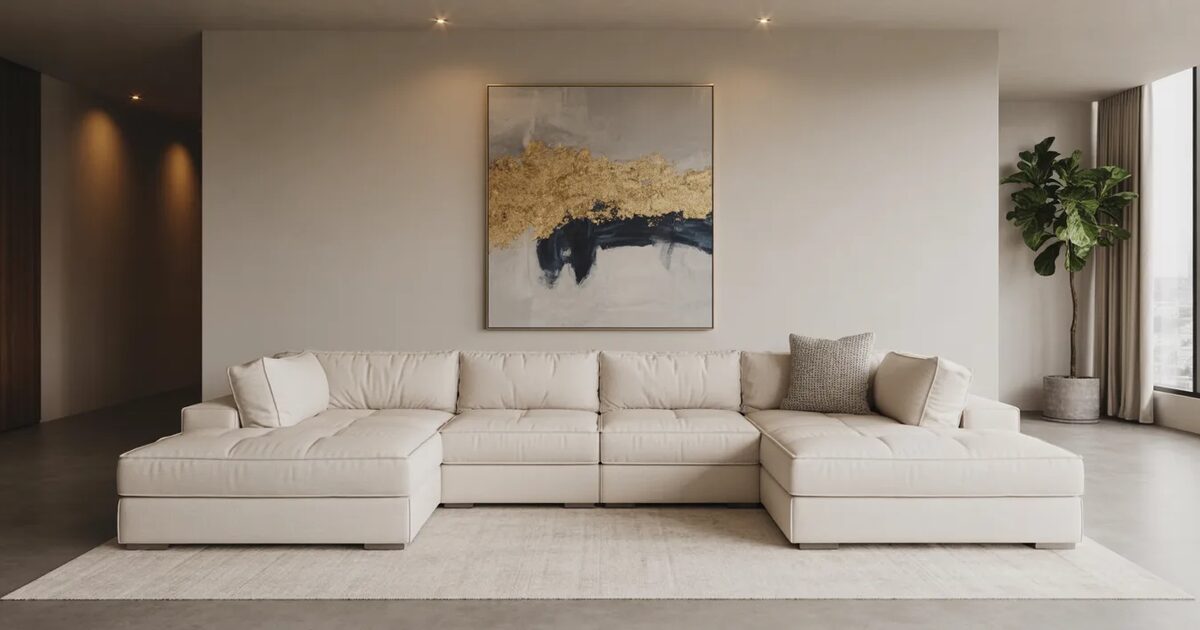
Halfway through the film, someone has a stiff neck, someone else cannot see the screen for the reflection of a lamp, and the person at the end of the sofa has been wedged beside a speaker for an hour. Nobody complains, because it is only a film. But a room where you are slightly uncomfortable every evening is a room you will use less than you meant to.
Part of the interior design Chelmsford guides by Rachel Buscall Interiors. See all interior design guides.
These media room design ideas start from the people in the chairs, then work outwards to the light, the sound and the technology. Get that order right and the room feels generous. Get it wrong and the equipment cannot rescue it.
Start with how the room will really be used
A dedicated cinema room behind a closed door is one brief. A family room that doubles as a media room is another. Decide which you are designing before you choose a single sofa, because the answer shapes everything from the wall colour to whether you need daylight at all.
Ask who will use it and when. Children after school, two adults on a Friday night, six friends for a match. A room for four needs to be comfortable for eight on the rare occasion, which usually means space for a couple of extra seats that can be pulled up and put away. Write the answers down. The guide to writing an interior design brief is a useful template for doing it properly.
Media room design ideas that start with comfortable seating
Comfort comes before style here, and upholstery should suit real use. Tightly woven, hard-wearing fabrics cope with snacks and pets, and covers that can be vacuumed or wiped make life easier. A deep, supportive sofa you can sink into for two hours will serve you better than a beautiful, upright one. Try before you buy, and sit for longer than a minute.
Think about the angle and distance to the screen. Seats placed very close, or far off to one side, make everyone tilt their head. A broadly central position, with the screen at a comfortable height for eyes when seated, is kinder to necks. Resist mounting a screen high up above a fireplace unless that is genuinely the only option, because looking up for long periods tires you.
Leave room for movement. Recliners need space behind and beside them to open fully. Side tables should sit within reach, with a surface for a drink and a lamp that can be switched off from the sofa. A clear route to the door lets someone leave for the kettle without climbing over a row of knees.
Size the screen to the room as well. A very large screen in a small room is tiring to watch, while a modest one in a large room has everyone squinting. Choose it for the distance you will sit, and ask the supplier what viewing distance they recommend.
Control the light before you buy anything
Light is the thing that spoils a screen most often, and it is the cheapest to fix at the design stage. Daylight, lamps and reflective surfaces all bounce off a screen. Place the screen on a wall that does not face a window, or fit proper blackout curtains or blinds that close fully at the sides and the top.
Plan the artificial light in layers, each on its own dimmer. A low glow from wall lights or lamps for walking around, a softer wash for conversation, and separate, dim accent light behind or beside the screen to ease eye strain. Avoid any bright bulb that sits within the line of sight. The guide to layering lighting in a luxury home explains the principle in more detail.
Surface choices matter as much. Glossy paint, polished stone and mirrors all throw light back. Even the ceiling plays a part, since a deep matt ceiling sends less light back down than a pale one. Matt, deeper colours absorb it and make the screen look sharper in a dark room. If you want to test how a dark tone behaves in your space, the advice on choosing a colour scheme for your home shows how to sample it at different times of day.
Soften the sound with materials
Bare walls, hard floors and a high ceiling make a room echo, and dialogue turns muddy. Soft materials absorb some of that. A generous rug, heavy lined curtains, upholstered seating, cushions and fabric wall coverings all help, and the more of them you add, the calmer the room will sound.
Books on shelves and textured walls break up sound as well. Placement affects the sound too. Speakers pushed into corners or hidden behind furniture sound different from those given room to breathe, so follow the supplier's advice and test before fixing anything permanently. Keep a balance, though. Absorb everything and the room can feel dead and strangely quiet, so leave a few harder surfaces to keep it feeling natural.
If noise travelling to the rooms next door or the neighbours worries you, that is a question for a qualified professional. Soft furnishings alone will not stop sound passing through a wall or floor, and structural fixes need proper advice before any work starts.
Hide the technology without hiding the fun
A tangle of cables undoes the calm you have created. Decide where the screen, the speakers and the equipment will sit, then plan the cable routes before walls are decorated. Concealed routes and hidden storage cost far less at that stage than later.
Equipment needs air. Leave space around anything that gives off heat, and avoid sealing it into a tight cupboard without ventilation. Check the manufacturer's guidance, and ask a qualified electrician to deal with sockets and wiring. Plenty of sockets in sensible places beat extension leads.
Storage deserves its own thought. Somewhere for remotes, games, blankets and the odd board game keeps surfaces clear, and a closed cupboard or a drawer beside the sofa does it better than an open shelf.
Make it a room you want to sit in at noon
A media room that only works in the dark is a missed opportunity. Choose warm, tactile materials, add a throw and a couple of cushions, and put something you love on the walls so the room is pleasant with the curtains open. Many of the ideas in living room design trends to watch in 2026 carry across to a room that has to do two jobs.
If you are working out how your own room could be arranged, talk through my room with Rachel, or take a look at the approach to interior design in Chelmsford first.
Rachel Buscall Interiors
Where Business Excellence Meets Design Innovation