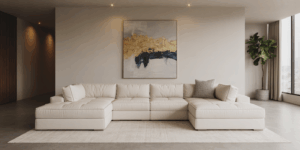
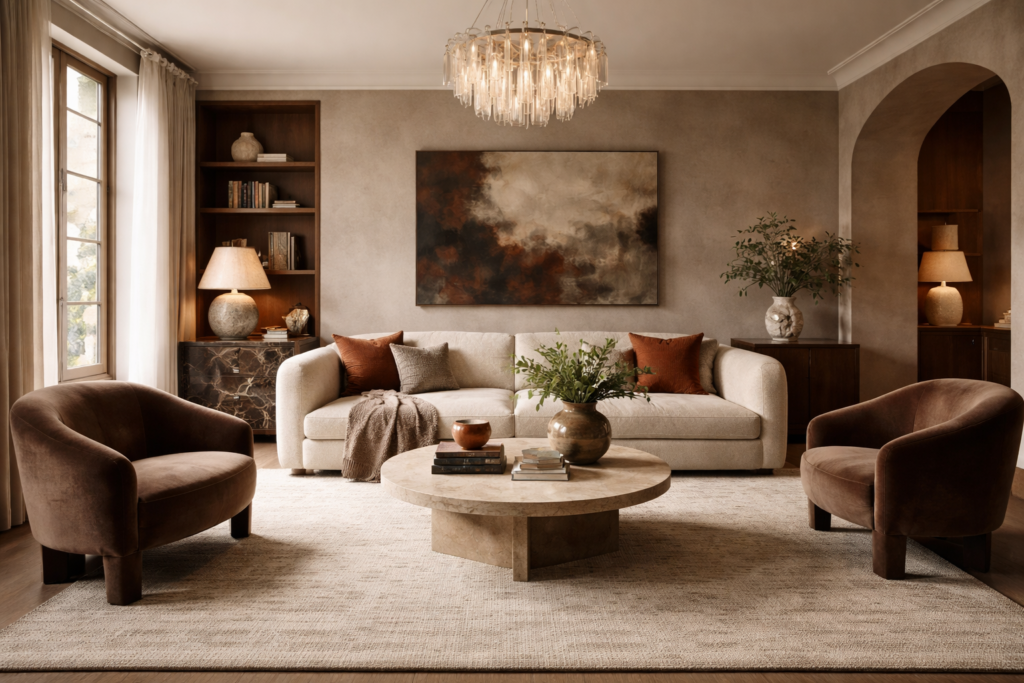
In 2026, the living room evolves into a more intentional and emotionally intelligent space — one that balances comfort with sophistication, and personal expression with long-term design value. Once treated as a purely social or display-driven room, the living space is now designed to support modern lifestyles: hosting, unwinding, working, and reconnecting.
Minimalism softens, formality relaxes, and the living room becomes layered, expressive and deeply human. For discerning clients, this shift represents a move toward spaces that feel as good to live in as they look — interiors that perform, adapt and endure.
At Rachel Buscall Interiors, living room design is approached with a strategic mindset: every aesthetic choice is considered in terms of function, longevity and emotional impact.
Here are the key living room design trends shaping 2026 — and how to apply them with intelligence and restraint.
1. Living Rooms with Identity — Personal Over Prescriptive
Generic, showroom-style living rooms are firmly left behind in 2026. Instead, the most compelling spaces reflect the client’s personality, lifestyle and story.
Collected furniture, meaningful artwork and layered styling create rooms that feel curated rather than staged. Authenticity becomes the ultimate luxury — where confidence replaces conformity, and design feels intentional rather than trend-driven.
A successful living room now tells a story, balancing elegance with individuality.
2. Deeper, Mood-Driven Colour Schemes
The era of uniform neutrals gives way to richer, more atmospheric palettes. Living rooms embrace warm, enveloping tones such as clay, olive, oxblood, charcoal, deep blue and muted jewel shades.
Used thoughtfully, colour enhances intimacy and comfort — grounding large spaces and elevating smaller ones. In high-end living rooms, contrast is carefully controlled, allowing bold tones to feel timeless rather than overpowering.
Colour in 2026 is confident, but always considered.
3. Statement Sofas and Sculptural Seating
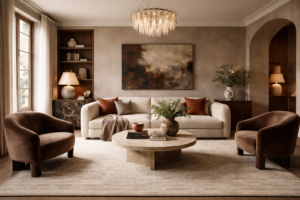
Furniture takes centre stage in the living room, with sofas and armchairs becoming sculptural focal points. Curved silhouettes, generous proportions and tactile upholstery define seating designed for both comfort and presence.
Rather than matching sets, seating is layered — combining forms, textures and finishes to create visual depth. Comfort is non-negotiable, but never at the expense of refined design.
This is seating that invites people to stay.
4. Craftsmanship and Textural Depth
Living rooms in 2026 celebrate craftsmanship and material honesty. Hand-finished wood, bespoke joinery, artisanal ceramics and richly textured textiles add warmth and individuality.
These tactile elements soften spaces visually and emotionally, counterbalancing the digital nature of modern life. The human touch elevates the living room from polished to genuinely bespoke.
Quality craftsmanship is no longer a detail — it’s a defining feature.
5. Quiet Luxury Through Materials, Not Excess
Luxury in the living room is understated and sensory. Natural stone, refined timber, linen, wool, leather and aged metals dominate — materials chosen for how they feel, wear and age.
The focus shifts away from overt statements toward subtle richness and longevity. This approach supports a long-term design strategy, where investment pieces retain both aesthetic and financial value.
True luxury whispers rather than shouts.
6. Multi-Functional Layouts with Elegance
Modern living rooms are no longer single-purpose spaces. In 2026, layouts accommodate entertaining, relaxation, reading, remote work and family life — without compromising visual clarity.
Zoning is achieved through furniture placement, lighting and material changes rather than physical barriers. The result is a flexible yet refined living room that adapts effortlessly to daily life.
Functionality, when designed well, enhances beauty.
7. Sustainability as a Design Standard
Sustainable design is fully embedded in living room interiors. Clients are prioritising fewer, better-quality pieces over fast furniture and disposable trends.
Responsibly sourced materials, timeless designs and durable craftsmanship define spaces built to last. Sustainability is no longer a compromise — it is a marker of modern luxury and intelligent investment.
Living rooms are designed to evolve, not be replaced.
Living Rooms That Endur
The defining living room trends of 2026 are rooted in confidence, comfort and clarity of purpose. The most successful spaces will not chase trends, but interpret them with restraint — balancing personal expression with enduring design principles.
At Rachel Buscall Interiors, we believe exceptional living rooms are created when design vision meets strategic thinking — delivering spaces that feel refined, personal and timeless.