As we move through 2026, the interior design landscape is experiencing a thoughtful evolution. The conversation has shifted from showroom perfection to creating homes that feel genuinely lived-in, collected over time, and deeply personal. At Rachel Buscall Interiors, we’re excited to see this more considered approach to design taking hold—one that prioritises comfort, authenticity, and longevity over fleeting trends.
Here are the five trends defining interiors this year, each offering opportunities to create spaces that feel both current and timeless.
1. Conscious Restraint Over Excess
The maximalist movement has given way to something more nuanced in 2026. Designers are pursuing spaces that are quieter but not empty, restrained yet layered, moving away from visual spectacle toward thoughtful curation. This isn’t a return to stark minimalism—rather, it’s about being more selective with what we bring into our homes.
The focus has shifted to quality over quantity, with every piece earning its place in the room. Tokyo architect Keiji Ashizawa notes that memorable interiors are often those where people naturally want to stay longer, rather than spaces designed simply to impress. This approach creates homes that feel calm and inviting without sacrificing personality or warmth.
For Rachel Buscall Interiors clients, this means investing in fewer, better pieces—furniture with real craftsmanship, materials that age beautifully, and objects that hold genuine meaning. It’s about creating breathing room in your interiors whilst maintaining richness through texture, patina, and carefully chosen accents.
2. The Return to Antique and Vintage Pieces
One of the most significant shifts in 2026 is the embrace of antique and vintage furniture as foundational elements rather than occasional accents. This trend goes hand-in-hand with sustainability concerns and a desire for individuality that mass-produced furniture simply cannot provide.
Antique pieces offer solid construction, enduring design, and character that develops over decades. They anchor spaces with authenticity and tell stories that new items cannot replicate. Writer and curator Camille Okhio sees this interest manifesting in appreciation for items sourced from local auction houses, creating interiors that feel genuinely collected rather than purchased all at once.
The beauty of this trend is its versatility. A Georgian chest of drawers can sit perfectly beside a contemporary sofa, whilst an Edwardian mirror adds depth to a modern bathroom. At Rachel Buscall Interiors, we’ve always championed the mix of old and new—it’s what creates truly personal, layered spaces that evolve with you.
3. Tonal Decorating and Confident Colour
Tonal decorating is creating spaces that feel put together without being over-styled, achieved through layering varying strengths, tints and temperatures of the same colour across an entire room. After years of neutral-on-neutral palettes, 2026 sees colour being used as a structural design tool rather than merely decorative.
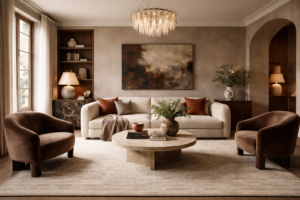
Deep, confident shades—rich pinks, earthy ochres, moody browns, and reddish terracottas—are being used to give spaces character and visual weight. These warm, enveloping colours create a sense of stability and comfort, making homes feel more like sanctuaries. Industry experts note that such colours have a cocooning effect, helping us cherish our homes more deeply.
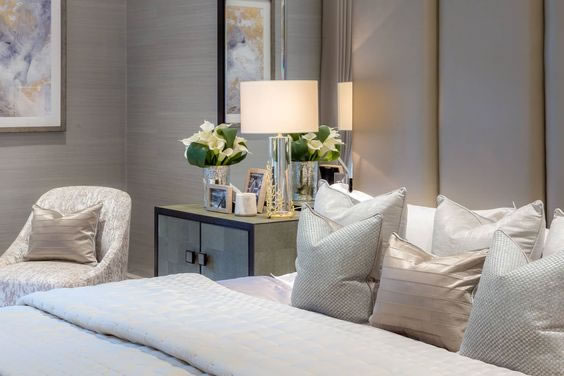
The key to this trend is cohesion without monotony. When walls, trim, and sometimes even ceilings are treated to varying intensities of the same hue, the result is sophisticated and harmonious. For those wary of committing to such boldness throughout a home, we recommend starting with a single, contained space—perhaps a powder room, study, or bedroom—where you can experience the enveloping effect without it dominating your entire interior.
4. Natural Materials as Foundation
Natural materials aren’t playing a supporting role in 2026—they’re the foundation. Hand-worked metals, lime-wash plaster, warm woods with visible grain, natural stone, and handmade tiles are valued for their sensory richness and the stories they carry.
This shift toward honest materials supports both sustainability and longevity. Elements in their natural or minimally processed state reduce manufacturing impact whilst improving durability. There’s also a tactile dimension that feels quietly luxurious—the warmth of a raw timber handrail, the irregularity of handmade tiles, the way natural stone develops character over time.
This trend reflects a growing preference for authenticity over polished perfection. At Rachel Buscall Interiors, we’ve seen clients increasingly drawn to materials that show their true nature—lime plaster walls with their subtle variations, reclaimed oak beams with visible grain and history, or stone that hasn’t been excessively polished to uniformity.
These materials ground a space, creating rooms that feel connected to the natural world and built to last. They’re the antithesis of disposable design, offering surfaces that improve with age rather than deteriorate.
5. The Collected, Personal Interior
Perhaps the most significant shift in 2026 is toward homes that look less “finished” in a showroom sense and more genuinely lived-in. Mixed textures, pieces that don’t match perfectly, art that means something to you personally, and shelves that reflect real life—these elements create spaces with soul.
The trend celebrates highly personal collections over generic styling. Holiday finds, colourful glass bottles, stacks of books, and favourite ceramics carry a specificity that mass décor cannot replicate. Grouping treasured items together rather than scattering them throughout a space only amplifies their impact.
Interior designer Brigette Romanek notes that people increasingly desire unique furniture and décor pieces rather than the trendy items they see online. This extends to incorporating handcrafted elements—artisan-made wood furniture, hand-painted ceramics, and pieces with asymmetric or sculptural components that show they’re not mass-produced.
This isn’t about adding more for the sake of it. It’s about adding what belongs. A vintage side table beside a newer sofa. A rug that looks loved. A lamp discovered at a market rather than ordered because it was trending. The result is spaces that evolve organically and feel distinctly yours.
Bringing It Together
What unites these five trends is a fundamental shift in how we approach our homes. In 2026, interiors are less about impressing visitors and more about creating spaces that support how we actually want to live. They’re about choosing quality over quantity, authenticity over perfection, and pieces with genuine meaning over those that simply fill space.
At Rachel Buscall Interiors, we believe the best interiors have always embodied these principles. The current trends simply affirm what we’ve long known: that thoughtful design, quality materials, and personal touches create spaces that stand the test of time.
If you’re considering refreshing your home this year, we’d love to help you navigate these trends in ways that feel authentic to your lifestyle and taste. Whether it’s sourcing the perfect antique piece, developing a confident colour palette, or curating a space that tells your story, we’re here to create interiors you’ll love for years to come.
For more inspiration and to discuss your interior design project, visit Rachel Buscall Interiors or get in touch with our team.