
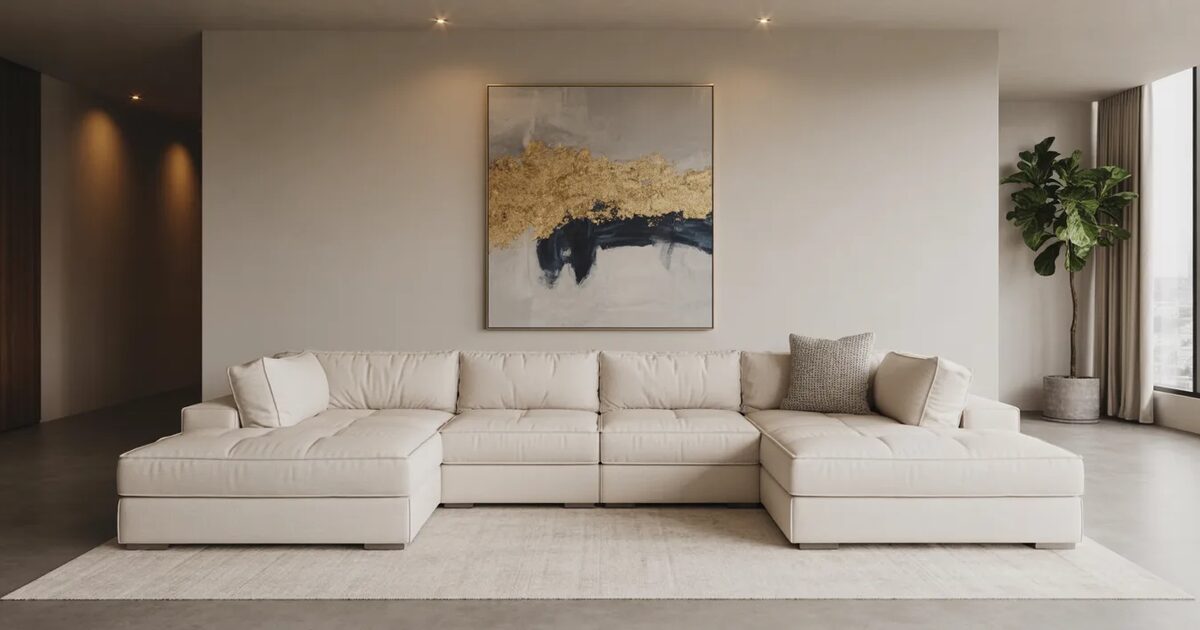
Almost every undersized rug does the same thing. It sits in the middle of the room like a postage stamp, the sofa stays off it, and the whole arrangement looks slightly nervous. If you are trying to work out how to choose a rug size, the honest answer is that you should buy bigger than feels comfortable, then check it against the furniture rather than the floor.
Part of the interior design Chelmsford guides by Rachel Buscall Interiors. See all interior design guides.
A rug has one main job. It ties a group of furniture into a single zone, and it only does that if the furniture is actually standing on it.
How to Choose a Rug Size: Start With the Furniture
Measure the furniture group, not the room. Ask which pieces belong together, then find a rug that lets them sit on it with a calm, deliberate border of floor around the edge. That border matters. A rug that stops a hand's width short of every wall looks like carpet that has lost its way. A rug that leaves a clear margin of bare floor looks chosen.
Walk the room with a tape measure and write down three numbers before you open a single website: the width and depth of your seating group, the width of your bed with its bedside tables, or the table length with its chairs pulled out. Those numbers tell you far more than the dimensions of the room itself.
Living Room Rugs: Let the Front Legs Land on the Rug
You have three sensible options in a living room, and they all share one rule. The furniture must connect to the rug.
The most generous option puts every leg of every seat on the rug. It suits larger rooms and makes the space feel luxurious and settled. The most common option places only the front legs of the sofa and armchairs on the rug, which links the pieces together without needing a huge rug. The third option, with nothing touching, usually looks like a mistake unless the rug is very large and sits within a roomy, open space.
Whichever you choose, keep the coffee table fully on the rug, and check that the sofa and chairs sit at a comfortable conversation distance. If you are still working out the arrangement itself, my thoughts on living room design will help you think about how people actually sit and talk.
A small rug under a large sofa is one of the most common mistakes in any living room. Go up a size.
Bedroom Rugs: Extend Past the Bed on Both Sides
In a bedroom, the rug is what your feet meet first each morning. You want something soft there, so the rug should reach out beyond the sides of the bed rather than hiding underneath it.
A good starting point is a rug that extends at least half a metre or so beyond each side of the bed, and a little past the foot if the room allows. Slide it so that roughly two thirds of the bed sits on it, leaving the headboard end and the bedside tables either on the rug or just beyond it, depending on the room. In a smaller bedroom, two runners placed along each side can look elegant and save money on a large single piece, though a single wide rug usually looks calmer.
Do check where the door swings and where wardrobe doors open. A thick rug that catches on a door is irritating within a week. If sleep quality is your priority, my guide to designing a luxury bedroom goes into the wider room.
Dining Room Rugs: Allow for the Pulled-Out Chair
Dining rugs follow a different logic, because chairs move. When someone stands up and pushes their seat back, the chair legs need to stay on the rug. If they drop off the edge, the chair tips and catches, and the rug curls at the corner.
The rule is simple. Take your table, then add generous space on every side, enough that a pulled-out chair still has all four legs on the rug. Round tables suit round rugs, and rectangular tables suit rectangular ones, though a square rug under a round table can work well in a square room. Choose a flat weave or a low pile here, because dense, thick pile makes chairs wobble and traps crumbs.
Shape, Pile and the Pad Underneath
Once the size is right, three smaller decisions finish the job.
Shape should echo the room. Rectangular rugs suit rectangular rooms, and a round rug can soften a room full of straight lines or sit beneath a round table. Pile should suit the traffic. High-traffic spaces such as hallways and family rooms are kinder to tougher, flatter weaves, while bedrooms can take something deeper and softer. Colour and pattern are a separate conversation, and my guide to choosing a colour scheme is a good place to begin.
Finally, buy a rug pad. A good one stops the rug creeping, protects the floor beneath it and makes even a thin rug feel more generous underfoot. It is a modest addition that you will notice every day.
Check It on the Floor Before You Buy
Here is the trick that saves the most regret. Mark out the rug you are considering with masking tape or sheets of newspaper, then live with the outline for a day. Walk through the room, sit on the sofa, pull out a dining chair, step out of bed. If the shape feels too big for a moment, it is probably right. If it feels comfortable straight away, it is probably a size too small.
Rugs are also one of the easiest ways to introduce colour, texture and warmth, so choosing well pays back every day. If you would rather not guess, you can talk through my room with Rachel and get a layout and scale that suits the whole space. And if you are planning a wider scheme, writing an interior design brief will help you decide where the rug fits among everything else.
Tape it out tonight, and let the floor tell you the answer.
Rachel Buscall Interiors
Where Business Excellence Meets Design Innovation