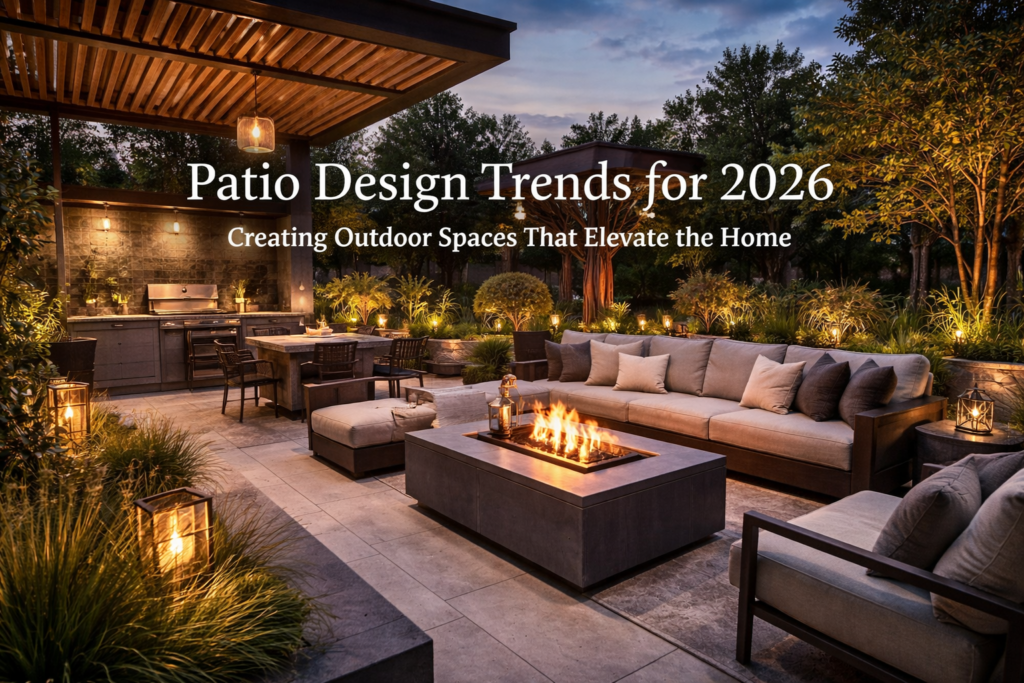
The patio is no longer just an outdoor seating area. In 2026, it becomes a sophisticated extension of the home—blending architecture, lifestyle, and property value into one carefully designed environment.
As both an interior designer and former finance professional, I approach patio design with a clear principle: outdoor spaces should deliver the same level of intelligence, comfort, and longevity as the interior of the home.
Here are the defining patio trends shaping 2026.
1. The Patio as an Outdoor Living Room
In 2026, patios are designed as true living spaces rather than occasional-use areas. The goal is to create a seamless connection between indoor and outdoor environments.
Key features include:
- Structured furniture layouts rather than scattered seating
- Outdoor rugs and soft textiles
- Architectural pergolas or partial coverings
- Layered planting that frames the space
The result is an outdoor environment that feels intentional, comfortable, and refined—suitable for both everyday living and entertaining.
2. Architectural Hardscaping
Hardscaping is becoming more architectural and less purely decorative. Patios are increasingly designed as part of the home’s broader architectural language.
Materials trending for 2026 include:
- Large-format porcelain paving
- Natural limestone or travertine
- Microcement outdoor surfaces
- Precision-cut stone slabs
These materials provide durability while delivering the clean, structured aesthetic increasingly associated with premium residential properties.
3. Integrated Outdoor Kitchens
Outdoor kitchens are moving beyond simple barbecues into fully functional culinary spaces.
Common features now include:
- Built-in grills and pizza ovens
- Integrated refrigeration
- Weather-resistant cabinetry
- Stone or concrete worktops
For many homeowners, the patio is becoming the centre of social life during warmer months. A well-designed outdoor kitchen significantly increases both lifestyle value and property appeal.
4. Layered Outdoor Lighting
Lighting is one of the most transformative elements in patio design, yet it is often underestimated.
In 2026, lighting strategies focus on layered illumination, combining:
- Subtle ground lighting along pathways
- Integrated LED strips within steps or seating
- Soft uplighting for trees and architectural features
- Warm pendant lighting beneath pergolas
This layered approach creates atmosphere while allowing patios to function comfortably from early evening through late night.
5. Natural, Climate-Resilient Planting
Planting schemes are shifting away from purely decorative arrangements toward climate-aware landscaping.
Key approaches include:
- Drought-resistant planting
- Structured evergreen backdrops
- Grasses and textured foliage for movement
- Low-maintenance planting combinations
These gardens feel natural and relaxed while remaining practical for modern lifestyles.
6. Fire Features and Seasonal Flexibility
One of the most important shifts in outdoor design is creating patios that remain usable throughout the year.
Fire elements are becoming central design features, including:
- Built-in fire pits
- Contemporary gas fireplaces
- Sculptural fire bowls
These features extend the seasonal use of the patio and create a natural focal point for social gatherings.
Final Thoughts: Outdoor Spaces With Purpose
Patios in 2026 are no longer secondary spaces. When designed intelligently, they become one of the most valuable and enjoyable areas of a property.
A successful patio design should:
- Extend the architectural identity of the home
- Support everyday living and entertaining
- Enhance the long-term value of the property
The most compelling outdoor spaces combine beauty with strategic thinking—exactly where design and investment meet.
Start Your Project
If you’re considering a patio transformation—or a wider residential or development project—I’d be delighted to help you approach it with clarity, confidence, and strategic vision.
Rachel Buscall Interiors
Where Business Excellence Meets Design Innovation