
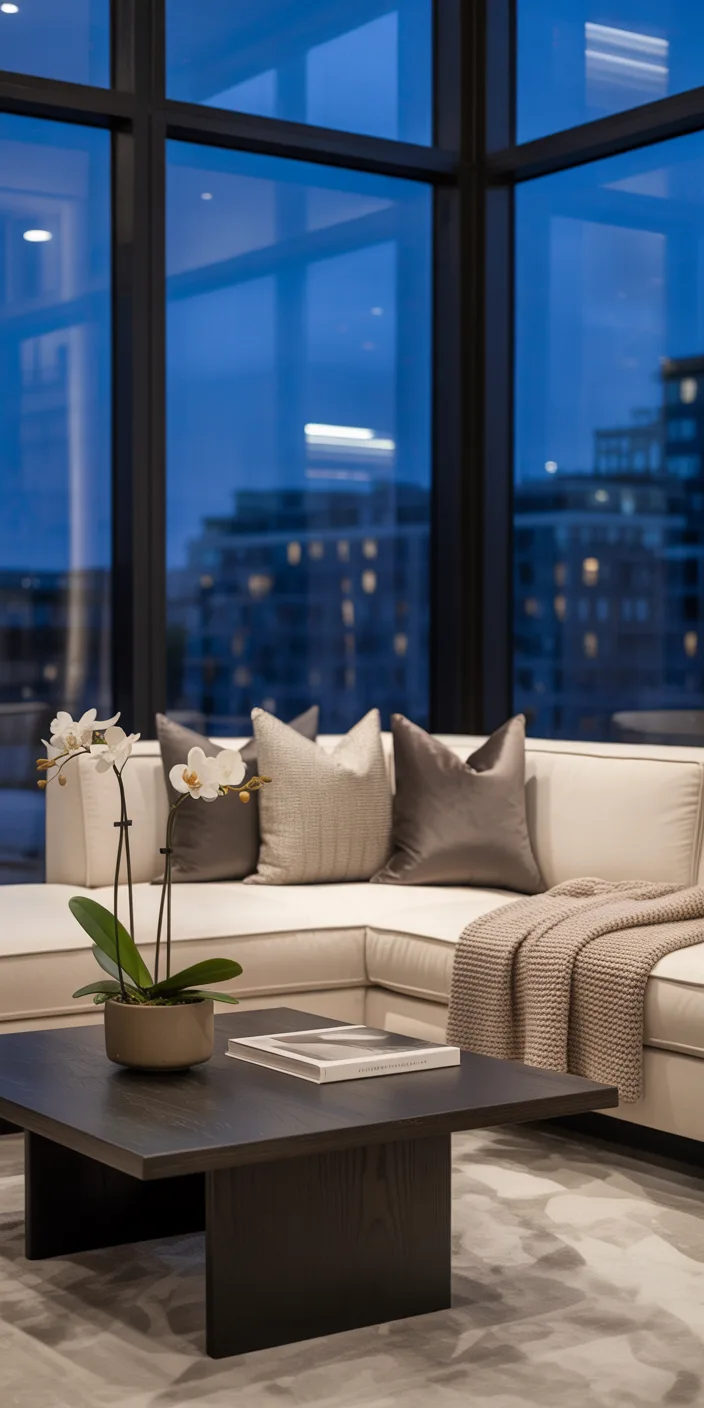
A luxury home that disappoints is rarely short of budget. The money went to the wrong things, in the wrong order, and nobody agreed what the house was for.
Wanting a beautiful space is easy. Getting one takes a run of unglamorous decisions, each made with the same end in mind. This is how I'd order them, with a designer or without one.
Begin with how the house is lived in
I'd want to know the morning routine before I looked at a single fabric. Who is up first, and where do they end up? Where does the light land at four in the afternoon? Do you host twelve people twice a year, or two people most nights? Those answers decide the layout, the lighting and the storage. The mood board comes last.
An honest brief helps most. "Timeless, elegant, classic" tells a designer almost nothing. "I want it to feel like a very expensive hotel, but the dog's bed has to live somewhere" tells them plenty. Say the slightly embarrassing things. If you want a structure for it, start with how to write an interior design brief.
Put the money where it is hard to change later
People spend heavily on statement pieces, then trim the one thing that decides whether a room works at all. That thing is lighting. I'd protect the lighting budget before the armchair, every time. Extraordinary furniture under poor light never feels right, while ordinary furniture under a well-planned scheme often does. How to layer lighting in a luxury home explains how the layers fit together.
Joinery and flooring belong in the same bracket. Both are costly to redo and you notice them every day.
Restraint is what you are paying for
Luxury is not a price per square metre. It is the moment you walk in and find that nothing is accidental and nothing is trying too hard.
That takes restraint, and restraint means deciding what to leave out, which is harder than adding. I like rooms that feel calm without feeling empty, built from materials that are as good in the making as they look, and that will still seem right in fifteen years.
A period house, a new build and a renovation are three different jobs
A period house arrives with opinions of its own: proportions, cornices, floors. The work is to respect them. A Victorian terrace is the obvious example, but the same applies to any older building.
A new build is the opposite problem. The rooms arrive as blank boxes, and the job is to add warmth and character that the architecture has not supplied.
In a renovation, the interior has to move in step with the building work. Bring the designer in before the walls move, not after.
Treat your designer as a collaborator and expect an opinion
A designer who shows you ten versions of the same sofa is handing the decision back to you. I'd rather be shown one answer with the reasoning behind it, and be free to argue. Sometimes the argument improves it.
The relationship works best when you share your reactions honestly and bring your dislikes along with your likes. The dislikes are often more useful.
Agree who decides what, and when
Most friction in a big project comes from vagueness, not from taste. Ask for the scope, the budget range and a schedule in writing, with lead times flagged on anything made to order. Agree early who signs off each decision, especially if there are two of you with different instincts. A short list of decisions with dates beside them saves arguments later.
The test of a finished room
The best sign is that you stop noticing the design. If every visitor comments on how beautifully a room has been designed, it is working for the designer. If people simply relax in it and cannot say why, it is working for you.
So decide what the house is for, protect the lighting budget, and leave out one thing you thought you needed. After that, talk your home through with me.